
TMS THERAPY AT OUR LITTLETON CLINIC
A NON-INVASIVE OPTION FOR DEPRESSION AND OCD
Transcranial Magnetic Stimulation (TMS) is a non-invasive treatment that uses
focused magnetic pulses to stimulate areas of the brain involved in mood regulation. It does not require anesthesia or sedation, and you stay awake during each session.
TMS is launching early January at our Littleton clinic.
A DIFFERENT OPTION WHEN MEDICATION HAS NOT BEEN ENOUGH.
WHAT IS TMS?
TMS is a medication-free treatment that works with the brain's own electrical activity. A treatment coil is placed against the scalp, and it delivers brief magnetic pulses to a specific area of the brain.
Many patients explore TMS when standard approaches, such as antidepressant medication or therapy, have not provided enough relief. Our team will help you decide whether it may be a good fit.

How ketamine works
A NON-INVASIVE APPROACH
TMS does not involve surgery, anesthesia, or sedation. The pulses pass
through the scalp without needing anything to be implanted.

TARGETED STIMULATION
The magnetic pulses are directed at brain regions involved in mood
regulation. Treatment is planned around each patient's needs.
MEDICATION-FREE
TMS does not rely on a daily medication. Some patients continue their
current medications during treatment, and our team will review this with you.
What TMS feels like
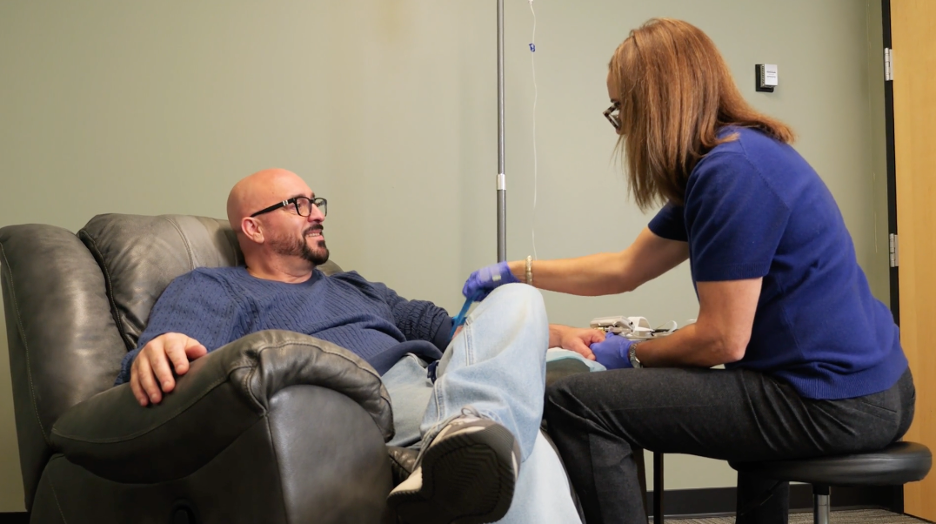
WHAT A TMS SESSION FEELS LIKE
You sit in a comfortable chair while the treatment coil rests against your head. Most patients describe a tapping or clicking sensation on the scalp.
You stay awake and alert throughout, and you can usually return to your day afterward.
Treatment usually takes place over several weeks, with sessions on most weekdays.
WHO MAY BE A CANDIDATE FOR TMS
-
TMS may be considered for adults whose depression has not improved enough with standard treatment.
-
TMS may not be suitable for everyone. Certain medical conditions or implants may make it unsafe, so every patient receives a full evaluation before treatment begins.
FREQUENTLY ASKED QUESTIONS ABOUT TMS
-
Most patients describe a tapping sensation and some scalp discomfort, which often lessens after the first few sessions. Our team can adjust the treatment to keep you comfortable.
-
No. You stay awake during every session.
-
Common effects include scalp discomfort and mild headache. Serious side effects are rare. Your provider will review risks with you before you begin.
TMS AT VITALITAS DENVER
TMS is offered at our Littleton clinic and led by Vitalitas. Treatment is planned around your history, symptoms, and goals.
Also available at our Littleton clinic: SPRAVATO and IV Ketamine Therapy.
RECENT BLOG FEATURES


TMS AT VITALITAS DENVER
TMS is offered at our Littleton clinic and led by Vitalitas. Treatment is planned around your history, symptoms, and goals.
Also available at our Littleton clinic: SPRAVATO and IV Ketamine Therapy.
Jeff is a Navy veteran, a medical professional, a husband, and a father of three. He spent 12 years in the Navy, primarily with the Marines, as a combat medic. He also spent many years overseas, including time in Iraq.
As he explains it, some things come home with you.
For Jeff, PTSD was not an abstract diagnosis. It affected how he moved through the world, how he slept, how he responded to stress, and how present he could be with the people he loved. He describes living in a state of hyperawareness: scanning, watching, adapting, pushing through, and completing the mission.
For years, he kept functioning. He worked. He built a career. He moved forward. But functioning is not the same as healing.